Sugarizer: Difference between revisions
No edit summary |
m typos |
||
| Line 3: | Line 3: | ||
|- style="vertical-align:top;" | |- style="vertical-align:top;" | ||
|[[File:Sugarizer_responsive.png|200px|left|link=]] | |[[File:Sugarizer_responsive.png|200px|left|link=]] | ||
|Sugarizer is a way to use Sugar on any device using web technologies (HTML5/JavaScript). Strictly speaking, Sugarizer is not a port of Sugar. Sugarizer is based on [https://github.com/sugarlabs/sugar-web Sugar Web library] | |Sugarizer is a way to use Sugar on any device using web technologies (HTML5/JavaScript). Strictly speaking, Sugarizer is not a port of Sugar. Sugarizer is based on [https://github.com/sugarlabs/sugar-web Sugar Web library], which mimics the Sugar UI using HTML5 and CSS3 and reproduces Sugar views (Home, List, ...). Sugarizer reimplements features of Sugar Core (datastore and journal) in JavaScript and integrates a bunch of activities written for Sugar in Sugar Web. So basically, Sugarizer is "just" a launcher of Sugar Web activities. A Sugarizer server component allows collaboration and presence. | ||
Sugarizer is distributed in the form of 3 components: | Sugarizer is distributed in the form of 3 components: | ||
| Line 14: | Line 14: | ||
== Thin Client == | == Thin Client == | ||
Sugarizer Thin Client is Sugarizer in a browser. Sugarizer Thin Client doesn't need any installation on the device but requires | Sugarizer Thin Client is Sugarizer in a browser. Sugarizer Thin Client doesn't need any installation on the device but requires permanent access to a Sugarizer Server. | ||
== Client == | == Client == | ||
Revision as of 17:46, 18 January 2016
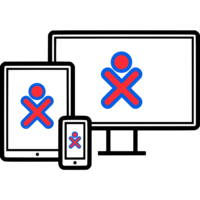 |
Sugarizer is a way to use Sugar on any device using web technologies (HTML5/JavaScript). Strictly speaking, Sugarizer is not a port of Sugar. Sugarizer is based on Sugar Web library, which mimics the Sugar UI using HTML5 and CSS3 and reproduces Sugar views (Home, List, ...). Sugarizer reimplements features of Sugar Core (datastore and journal) in JavaScript and integrates a bunch of activities written for Sugar in Sugar Web. So basically, Sugarizer is "just" a launcher of Sugar Web activities. A Sugarizer server component allows collaboration and presence.
Sugarizer is distributed in the form of 3 components:
|
Thin Client
Sugarizer Thin Client is Sugarizer in a browser. Sugarizer Thin Client doesn't need any installation on the device but requires permanent access to a Sugarizer Server.
Client
Sugarizer Client is Sugarizer installed locally on the device so it does not require any access to the Server - it works stand-alone. Server access could be required only when it needs network features.
Server
Sugarizer Server is the back-end for network features of Sugarizer. It means: allow deployment of Sugarizer on a local server, for example on a school server, so expose locally Thin Client (without Internet access). Sugarizer Server can also be used to provide collaboration features for Client and Thin Client on the network. Sugarizer Server could be deployed on any computer with Apache2, Node.js, and MongoDB.
A test Sugarizer server instance is accessible here.
Source Code
The source code of Sugarizer is available on github. See the README file for installation instructions.