Activities/Abacus: Difference between revisions
No edit summary |
No edit summary |
||
| Line 1: | Line 1: | ||
[[File:Abacus.jpg]] | [[File:Abacus.jpg]] | ||
== Where to get Abacus == | |||
[http://activities.sugarlabs.org/en-US/sugar/addon/4293/ Activity] | [http://git.sugarlabs.org/projects/abacus/repos/mainline Source] | |||
== About Abacus == | == About Abacus == | ||
| Line 5: | Line 9: | ||
[[File:Abacus-icon.png]] | [[File:Abacus-icon.png]] | ||
[http://en.wikipedia.org/wiki/Abacus Abacus] lets the learner explore different representations of numbers using different mechanical counting systems developed by the ancient Romans and Chinese. There are several different variants available for exploration: a [http://en.wikipedia.org/wiki/Suanpan suanpan], the traditional Chinese abacus with 2 beads on top and 5 beads below; a [http://en.wikipedia.org/wiki/Soroban soroban], the traditional Japanese abacus with 1 bead on top and 4 beads below; and the [http://en.wikipedia.org/wiki/Abacus#Russian_abacus schety], the traditional Russian abacus, with 10 beads per column, with the exception of one column with just 4 beads used for counting in fourths. | [http://en.wikipedia.org/wiki/Abacus Abacus] lets the learner explore different representations of numbers using different mechanical counting systems developed by the ancient Romans and Chinese. There are several different variants available for exploration: a [http://en.wikipedia.org/wiki/Suanpan suanpan], the traditional Chinese abacus with 2 beads on top and 5 beads below; a [http://en.wikipedia.org/wiki/Soroban soroban], the traditional Japanese abacus with 1 bead on top and 4 beads below; and the [http://en.wikipedia.org/wiki/Abacus#Russian_abacus schety], the traditional Russian abacus, with 10 beads per column, with the exception of one column with just 4 beads used for counting in fourths. | ||
Revision as of 22:19, 2 April 2010

Where to get Abacus
About Abacus

Abacus lets the learner explore different representations of numbers using different mechanical counting systems developed by the ancient Romans and Chinese. There are several different variants available for exploration: a suanpan, the traditional Chinese abacus with 2 beads on top and 5 beads below; a soroban, the traditional Japanese abacus with 1 bead on top and 4 beads below; and the schety, the traditional Russian abacus, with 10 beads per column, with the exception of one column with just 4 beads used for counting in fourths.
-
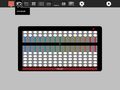 suanpan
 -
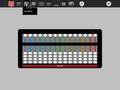 soropan
 -
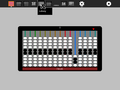 schety


Coming soon
Nepohualtzintzin, a Mayan abacus based on 20. "The Nepohualtzintzin is divided in two main parts separated by a bar or intermediate cord. In the left part there are four beads, which in the first row have unitary values (1, 2, 3, and 4), and in the right side there are three beads with values of 5, 10, and 15 respectively. In order to know the value of the respective beads of the upper rows, it is enough to multiply by 20 (by each row), the value of the corresponding account in the first row. Altogether, there are 13 rows with 7 beads in each one, which makes up 91 beads in each Nepohualtzintzin."