Sugar Labs/Current Events: Difference between revisions
m typos |
|||
| Line 13: | Line 13: | ||
still failing – and we embarked upon a path to do something about | still failing – and we embarked upon a path to do something about | ||
it. We developed a deployable model of one-to-one computing enabling | it. We developed a deployable model of one-to-one computing enabling | ||
us to advocate for a pedagogy of | us to advocate for a pedagogy of [http://en.wikipedia.org/wiki/Constructionism_%28learning_theory%29 constructionist learning], where "learning can happen most effectively | ||
[http://en.wikipedia.org/wiki/Constructionism_%28learning_theory%29 | |||
constructionist learning], where "learning can happen most effectively | |||
when people are also active in making tangible objects in the real | when people are also active in making tangible objects in the real | ||
world." | world." | ||
Over the course of four years, we've put Sugar into the hands of | Over the course of four years, we've put Sugar into the hands of | ||
almost two | almost two million children. Our goal has been to give them a | ||
"learning platform" – one that encourages them to be expressive with | "learning platform" – one that encourages them to be expressive with | ||
knowledge, to collaborate, and to reflect. | knowledge, to collaborate, and to reflect. | ||
| Line 32: | Line 30: | ||
computer is being allocated at the end of the school day. | computer is being allocated at the end of the school day. | ||
We have not been advocating anything goes; nor have we been anti | We have not been advocating "anything goes"; nor have we been anti | ||
teacher. Rather, we have been encouraging "guided discovery", where | teacher. Rather, we have been encouraging "guided discovery", where | ||
the teacher has an active role in steering the learners towards | the teacher has an active role in steering the learners towards | ||
| Line 40: | Line 38: | ||
Our interventions are guided with a goal in mind – | Our interventions are guided with a goal in mind – | ||
[http://davidbrin.blogspot.com/2006/06/allocation-vs-markets-ancient-struggle.html | [http://davidbrin.blogspot.com/2006/06/allocation-vs-markets-ancient-struggle.html the empowerment of individual competitive and cooperative opportunity]. | ||
the empowerment of individual competitive and cooperative | |||
opportunity]. | |||
:"It would take wit, insight and incredible perspective for many of | :"It would take wit, insight and incredible perspective for many of them to pull back and admit: "Wait... I am prescribing the very thing I should hate. What I really ought to want are genuinely liberal markets, in which the state ensures that all players get to know and negotiate and play the great creative game from a level playing field. Yes, that will mean some "allocating" to raise up poor children to be ABLE to compete well. And yes we must allocate to take into account the needs of generations yet to come. But the thing I am devoted to is not allocation, ''per se''! The thing I am dedicated to is giving all people (including those yet to come) a fair chance to play." —David Brin | ||
them to pull back and admit: "Wait... I am prescribing the very thing | |||
I should hate. What I really ought to want are genuinely liberal | |||
markets, in which the state ensures that all players get to know and | |||
negotiate and play the great creative game from a level playing | |||
field. Yes, that will mean some "allocating" to raise up poor children | |||
to be ABLE to compete well. And yes we must allocate to take into | |||
account the needs of generations yet to come. But the thing I am | |||
devoted to is not allocation, ''per se''! The thing I am dedicated to is | |||
giving all people (including those yet to come) a fair chance to | |||
play." —David Brin | |||
A theme I have taken up repeatedly since we started Sugar Labs is | A theme I have taken up repeatedly since we started Sugar Labs is | ||
| Line 114: | Line 100: | ||
collection of tools we use for communicating with the Sugar | collection of tools we use for communicating with the Sugar | ||
community. Please add your suggestions to | community. Please add your suggestions to | ||
[[Blogs#Possible_tools_for_a_new_community_site|possible tools for | [[Blogs#Possible_tools_for_a_new_community_site|possible tools for a | ||
new community site.]] | new community site.]] | ||
| Line 142: | Line 128: | ||
A few selected highlights (from Simon's release notes): | A few selected highlights (from Simon's release notes): | ||
* We have significantly improved collaboration when XO-1.5 is used | * We have significantly improved collaboration when XO-1.5 is used with no Access Points available ("under a tree"). The Neighborhood View now shows three default Ad-hoc networks (for channels 1, 6, and 11) in user-friendly icons, and XOs will auto-connect without user intervention. This behavior is similar to the "mesh" behavior on XO-1. | ||
with no Access Points available ("under a tree"). The Neighborhood | |||
View now shows three default Ad-hoc networks (for channels 1, 6, and | |||
11) in user-friendly icons, and XOs will auto-connect without user | |||
intervention. This behavior is similar to the "mesh" behavior on | |||
XO-1. | |||
* You may now share Journal entries with another learner using a USB | * You may now share Journal entries with another learner using a USB drive or SD card. The user experience is: Martin wants to give a picture he has been drawing to Simon. He plugs in his USB drive and copies the Journal entry on the drive. Simon plugs in Martin's drive in his laptop. The entry will be shown with Martin's XO color on the drive. Simon copies Martin's entry into his Journal. | ||
drive or SD card. The user experience is: Martin wants to give a | |||
picture he has been drawing to Simon. He plugs in his USB drive and | |||
copies the Journal entry on the drive. Simon plugs in Martin's drive | |||
in his laptop. The entry will be shown with Martin's XO color on the | |||
drive. Simon copies Martin's entry into his Journal. | |||
* We have added support for USB2VGA adapters. You can now connect an | * We have added support for USB2VGA adapters. You can now connect an XO to a projector over a USB2VGA adapter and project what is on your XO screen onto a screen or for many people to see. | ||
XO to a projector over a USB2VGA adapter and project what is on your | |||
XO screen onto a screen or for many people to see. | |||
* In this build certain activities are protected from being deleted by | * In this build certain activities are protected from being deleted by accident. In the activity list in the home view the erase option is disabled for those. Protected activities are: Browse, Terminal, Log, Write, ImageViewer and Record. Note that the user can still install newer versions of these activities. | ||
accident. In the activity list in the home view the erase option is | |||
disabled for those. Protected activities are: Browse, Terminal, Log, | |||
Write, ImageViewer and Record. | |||
newer versions of these activities. | |||
7. Tom Gilliard (satellit) has been making steady progress on Sugar | 7. Tom Gilliard (satellit) has been making steady progress on Sugar | ||
Revision as of 14:56, 4 February 2011
What's new
This page is updated each week (usually on Monday morning) with notes from the Sugar Labs community. (The digest is also sent to the community-news at sugarlabs.org list, blogged at walterbender.org, and archived here.) If you would like to contribute, please send email to walter at sugarlabs.org by the weekend. (Also visit planet.sugarlabs.org.)
Sugar Digest
1. While shovelling snow I have been reflecting on Sugar – a lot of snow, hence a lot of reflecting. Looking back, I came across a quote from 2007: "change equals risk". At the time, I was speaking out against incremental change to a global educational system that was failing to meet the needs of our children. The status quo was failing – and is still failing – and we embarked upon a path to do something about it. We developed a deployable model of one-to-one computing enabling us to advocate for a pedagogy of constructionist learning, where "learning can happen most effectively when people are also active in making tangible objects in the real world."
Over the course of four years, we've put Sugar into the hands of almost two million children. Our goal has been to give them a "learning platform" – one that encourages them to be expressive with knowledge, to collaborate, and to reflect.
While we have had impact in the formal setting of the classroom, with Sugar, there is an opportunity for using Sugar in an informal setting as well, where, unconstrained by the "official" curriculum, the learner has more of an opportunity to dig more deeply into areas of personal interest. In Caacupé, for example, there has been extensive use of Saturday learning clubs. In Rwanda, informal time for the computer is being allocated at the end of the school day.
We have not been advocating "anything goes"; nor have we been anti teacher. Rather, we have been encouraging "guided discovery", where the teacher has an active role in steering the learners towards "powerful ideas" and engaging the learners in reflection and a critical dialogue about their work. Sugar facilitates this dialogue by providing tools, e.g., the Journal, in support of reflection.
Our interventions are guided with a goal in mind – the empowerment of individual competitive and cooperative opportunity.
- "It would take wit, insight and incredible perspective for many of them to pull back and admit: "Wait... I am prescribing the very thing I should hate. What I really ought to want are genuinely liberal markets, in which the state ensures that all players get to know and negotiate and play the great creative game from a level playing field. Yes, that will mean some "allocating" to raise up poor children to be ABLE to compete well. And yes we must allocate to take into account the needs of generations yet to come. But the thing I am devoted to is not allocation, per se! The thing I am dedicated to is giving all people (including those yet to come) a fair chance to play." —David Brin
A theme I have taken up repeatedly since we started Sugar Labs is sustainability. We have not been interested in resilience in the usual sense of trying to sustain the status quo. Rather, we are trying to give children the capacity to grow and adapt so that they can thrive in a changing and challenging world.
Looking forward in 2011, we have any number of technical challenges: Python introspection, GNOME 3.0, etc. in order to advance the utility, stability, and maintainability of our product. A recent GNOME camp attended by Simon Schampijer and Tomeu Vizoso suggest that these are achievable goals. We have some refactoring to do in order to better support accessibility. Lots of minor patches in service of deployments are being submitted by the Dextrose team (a combined effort of some of our deployments, community members, and Activity Central employees. We have several efforts to revitalize the Sugar-on-a-Stick and Virtual Sugar projects, as accessibility to Sugar remains our biggest technical challenge. (Indeed, a recent marketing survey conducted by a team of Sloan students suggested that while 90% of those surveyed recommend Sugar to others, only 33% of those who then try to download Sugar are successful.)
Meanwhile, we continue to debate core issues regarding Sugar as it relates not just to usability, but also to how Sugar impacts learning. Towards that goal, we face social and organizational challenges: working with deployments; working with teachers; working with end users. Claudia Urea's weekly learning chat has been a model that I hope we can scale up in coming months. Pablo Flores is also working on various models of community outreach.
Sugar is as much a service as a product. As a community we have not put as much effort into that aspect of our offering. I am hopeful that a large portion of our services will be offered by our growing number of local labs. But we need to ensure adequate support for those efforts.
2. A few weeks ago I was at the Consumer Electronics Show (CES). The small, inexpensive, connected device was ubiquitous. We have to think about what role these devices may play in learning and if or how Sugar (or some derivative of Sugar) will be part of the mix, i.e., are there aspects of Sugar that we should be exporting into the context of Android? Perhaps the biggest challenge is how to bring the spirit of appropriation to these platforms which are first and foremost tools of consumption.
Help wanted
3. Chris Leonard is looking for help with translations. "Just about every language (besides Spanish) has some strings that need work. Please consider volunteering some time and effort to improve the localization in your favorite language. Recruiting new localizers is also a very valuable contribution." See http://translate.sugarlabs.org/
In the community
4. We are in the process of rethinking our wesite design and also the collection of tools we use for communicating with the Sugar community. Please add your suggestions to possible tools for a new community site.
5. The Tour of Uruguay will be taking place in late March. The Sugar Labs-affiliated cycling team will be one of the teams participating. We should do something with the community involving the physics of cycling (e.g., odometer) and maps (e.g., get every child to document the part of the race that goes through their town or village) and whatever other ideas people have.
Tech Talk
6. I've been tardy in acknowledging the release of os860 from OLPC. It is the latest "official" release for the XO-1 and XO-1.5 laptops. The release is based on Fedora 11 and contains the latest Sugar 0.84 (including many backported patches from more recent Sugar releases) and the GNOME desktop. See release notes.
Many thanks to everyone Simon Schampijer, Martin Langhoff, and the OLPC Association team, who led a group of testers, translators, documenters, developers and others!!
A few selected highlights (from Simon's release notes):
- We have significantly improved collaboration when XO-1.5 is used with no Access Points available ("under a tree"). The Neighborhood View now shows three default Ad-hoc networks (for channels 1, 6, and 11) in user-friendly icons, and XOs will auto-connect without user intervention. This behavior is similar to the "mesh" behavior on XO-1.
- You may now share Journal entries with another learner using a USB drive or SD card. The user experience is: Martin wants to give a picture he has been drawing to Simon. He plugs in his USB drive and copies the Journal entry on the drive. Simon plugs in Martin's drive in his laptop. The entry will be shown with Martin's XO color on the drive. Simon copies Martin's entry into his Journal.
- We have added support for USB2VGA adapters. You can now connect an XO to a projector over a USB2VGA adapter and project what is on your XO screen onto a screen or for many people to see.
- In this build certain activities are protected from being deleted by accident. In the activity list in the home view the erase option is disabled for those. Protected activities are: Browse, Terminal, Log, Write, ImageViewer and Record. Note that the user can still install newer versions of these activities.
7. Tom Gilliard (satellit) has been making steady progress on Sugar images for use in virtual machines. In particular, he is getting much better (more stable and consistent) results on MAC hardware. See other virtual machines.
Sugar Labs
Gary Martin has generated a SOM from the past few weeks of discussion on the IAEP mailing list.
-
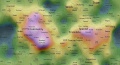 2011 Jan 22nd-28th (43 emails)
 -
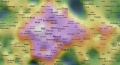 2011 Jan 15th-21st (46 emails)
 -
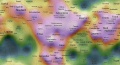 2011 Jan-8th-14th (21 emails)
 -
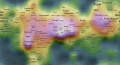 2011 Jan 1st-7th (15 emails)


Visit our planet for more updates about Sugar and Sugar deployments.
Community News archive
An archive of this digest is available.
Planet
The Sugar Labs Planet is found here.