Sugar Labs/SOM: Difference between revisions
Garycmartin (talk | contribs) |
Garycmartin (talk | contribs) |
||
| Line 20: | Line 20: | ||
<gallery> | <gallery> | ||
Image:2008-September-13-19-som.jpg|'''2008 Sept 13th-19th'''<br>Discussions about deployment feedback; interesting side cluster regarding example mock-up PR. | Image:2008-September-13-19-som.jpg|'''2008 Sept 13th-19th'''<br>Discussions about deployment feedback; an interesting side cluster regarding example mock-up PR material. | ||
Image:2008-September-6-12-som.jpg|'''2008 September 6th-12th''' | Image:2008-September-6-12-som.jpg|'''2008 September 6th-12th''' | ||
Image:2008-August-30-September-5-som.jpg|'''2008 Aug 30th - Sept 5th''' | Image:2008-August-30-September-5-som.jpg|'''2008 Aug 30th - Sept 5th''' | ||
Revision as of 17:02, 21 September 2008
Kohonen Self Organising Maps

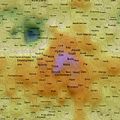
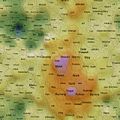
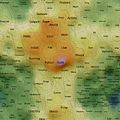
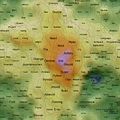
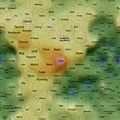
Self Organising Maps (SOMs) can act as 2D spatial summariser visualisations of multidimensional data. In the maps shown here, text distance metrics are generated from the weekly/monthly content on some of the more active mailing lists. Using a geographic like landscape metaphor, the height (colour gradient) indicates features with strong associations to all other features; proximity represents association between specific features (e.g. related words), and label size is a rough guide to basic frequency of a feature. There are many "correct" map layouts for the same set of data, each map generation will usually settle into a slightly different set of local minima, but the associations are no less valid for each. After removing linguistic junk words, and word stemming, the maps currently pick the weeks/months top ~200 features by frequency. Each is a continuous surface and wraps around north/south and east/west (surface of a torus), so if you find an interesting label to one side, remember to check it's neighbours on the opposite side.
What Do They Show?
Well, you could just treat them like tag clouds, showing the top 200 word features used on the list for a given week/month, but the maps also hold spacial information. Word features that appear close together on the map were used closely (on average) in text content from the list. A height metaphor is also used to indicate the features with the strongest mean associations - the map auto centres on the highest pink peak features, these words have the strongest associations with all the rest of the features on the map; word features in the blue and green areas have weaker mean associations relative to the pink highs, but should not be considered negatively as they will often be tightly associated with surrounding neighbours.
SOM Related Research Papers

Self-Organizing Maps and Constructive Learning (PDF) Honkela T., Leinonen T., Lonka K., Raike A. (2000): Self-Organizing Maps and Constructive Learning. Proceedings of ICEUT'2000, International Conference on Educational Uses of Communication and Information Technologies, Beijing, China. August 21-25, 2000, pp. 339-343.
- In this article, the use of the self-organizing map (SOM) is approached on the basis of current theories of learning. Possibilities of computer and networked platforms that aim at helping human learning are also inspected. It is shown how the SOM can be considered a model of constructive learning. The area of constructive learning is outlined and two cases of using the self-organizing map in computer supported learning environments are presented.
It's An Education Project Mailing List
Weekly maps generated with posts from the IAEP mailing list - most recent maps shown first.
-
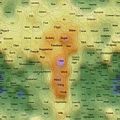 2008 Sept 13th-19th
Discussions about deployment feedback; an interesting side cluster regarding example mock-up PR material. -
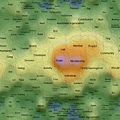 2008 September 6th-12th
 -
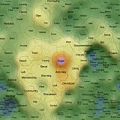 2008 Aug 30th - Sept 5th
 -
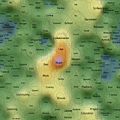 2008 August 23rd-29th
 -
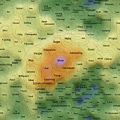 2008 August 16th-22nd
 -
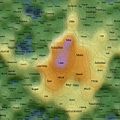 2008 August 9th-15th
 -
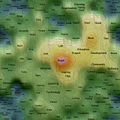 2008 August 2nd-8th
Sugar and Work surrounded by OLPC, lab, education, development, and community. -
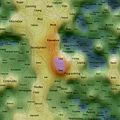 2008 Jul 26th - Aug 1st
A fairly quiet traffic week with a good educational focus (how to best use/apply/approach technology tools for education). -
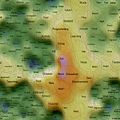 2008 July 19th-25th
Prominent verbs are: doing; programming; learning; and education; math; etc -
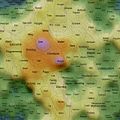 2008 July 12th-18th
Some prominent themes on mathematics education. -
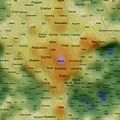 2008 July 5th-11th
Good educational focus; lesson plans, teachers, learning. -
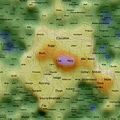 2008 Jun 28th - Jul 4th
Quiet again. Tail-end of Etoys discussion. -
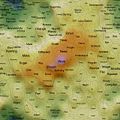 2008 June 21st-27th
List activity picked up this week; the ongoing Smalltallk/Debian drama is featured. -
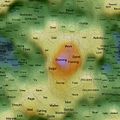 2008 June 14th-20th
A low traffic week. Most of it wiki admin related. -
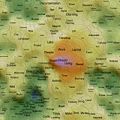 2008 June 7th-13th
The discussion seems to have been focused on features ("needs"), documentation and governance. -
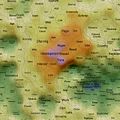 2008 May 31st - Jun 6th
Discussion seems to have been focused on Sugar development: what is used, needed, made and to be made. -
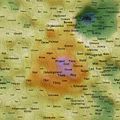 2008 May 24th-30th
The Sugar Lab wiki activity start to snowball. -
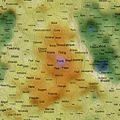 2008 May 17th-23rd
 -
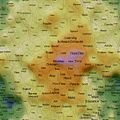 2008 May 10th-16th
Some overflow from dual boot Linux/Windows announcement. -
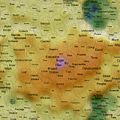 2008 May 1st-9th
Lots of discussion around the direction of Sugar, OLPC and the XO platform.


Sugar Mailing List
Monthly maps generated with posts from the Sugar mailing list - most recent maps shown first.
-
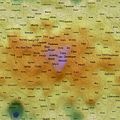 2008 July
 -
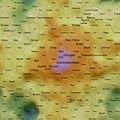 2008 June
 -
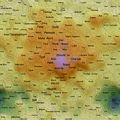 2008 May
 -
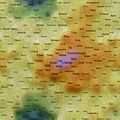 2008 April
 -
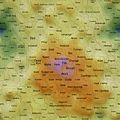 2008 March
 -
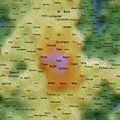 2008 February
 -
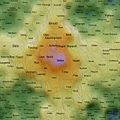 2008 January
 -
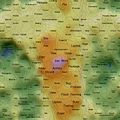 2007 December
 -
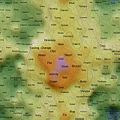 2007 November
 -
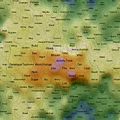 2007 October
 -
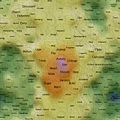 2007 September
 -
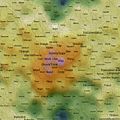 2007 August
 -
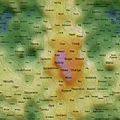 2007 July
 -
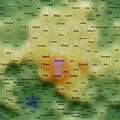 2007 June
 -
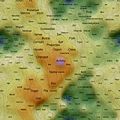 2007 May
 -
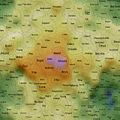 2007 April
 -
 2007 March
 -
 2007 February
 -
 2007 January
 -
 2006 December
 -
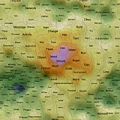 2006 November
 -
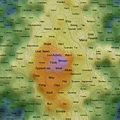 2006 October
 -
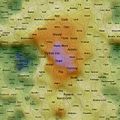 2006 September
 -
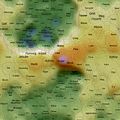 2006 August
 -
 2006 July


Future
The mapping algorithms and visualisation style will continue to be refined, details will be posted here on any significant modifications. The code base was originally designed for bulk text documents from a single author, tested on works of literature from Project Gutenberg.