Activities/Abacus: Difference between revisions
| Line 14: | Line 14: | ||
<gallery> | <gallery> | ||
File:Suanpan.png|suanpan | File:Suanpan.png|suanpan (Chinese) | ||
File:Soroban.png|soropan | File:Soroban.png|soropan (Japanese) | ||
File:Schety.png|schety | File:Schety.png|schety (Russian) | ||
File:Nepohualtzintzin.png|nepohualtzintzin | File:Nepohualtzintzin.png|nepohualtzintzin (Mayan) | ||
</gallery> | </gallery> | ||
[[Category:Activities]] | [[Category:Activities]] | ||
Revision as of 16:43, 3 April 2010

Where to get Abacus
About Abacus

Abacus lets the learner explore different representations of numbers using different mechanical counting systems developed by the ancient Romans and Chinese. There are several different variants available for exploration: a suanpan, the traditional Chinese abacus with 2 beads on top and 5 beads below; a soroban, the traditional Japanese abacus with 1 bead on top and 4 beads below; the schety, the traditional Russian abacus, with 10 beads per column, with the exception of one column with just 4 beads used for counting in fourths; and the Nepohualtzintzin, a Mayan abacus, 3 beads on top and 4 beads below (base 20).
-
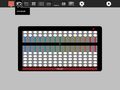 suanpan (Chinese)
 -
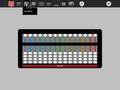 soropan (Japanese)
 -
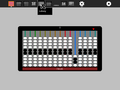 schety (Russian)
 -
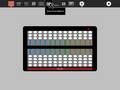 nepohualtzintzin (Mayan)


